


The February 24, 2021 meeting opened on Zoom with social time and banter about Ohio State & Michigan rivalries. Members announced their attendance via the chat function in Zoom.
Lori Walters opened the meeting and stated that everyone will be muted upon entering the Zoom meeting.
At 12:30, President Joanne Pierson started the meeting by ringing the bell. She asked Tom Strode to lead us in “My Country ‘Tis of Thee”. Peg Talburtt provided the inspiration – a poem entitled “And the People Stayed Home” written by Kitty O’Meara. For the musical interlude “He Ain’t Heavy, He’s My Brother” was sung by Marlena Studer and accompanied by Stephen Ragsdale on guitar.
President Joanne welcomed the attendees (93) and congratulated Tom Conlin on his 59 plus year membership in the Ann Arbor Rotary Club as he joined the Club in 1962. New members & guests were welcomed and the set-up team, the photographer, reporter, and attendance taker were thanked. Birthdays for the week were announced.
President Joanne thanked those who donated to the Ann Arbor Rotary Foundation in 2020 with total donations of $27,913 (125 donations and 26 memorial donations). A new bequest of $50,000 was received. There’s still time to contribute for the May 5 recognition. Go to the website or contact Norman Herbert.
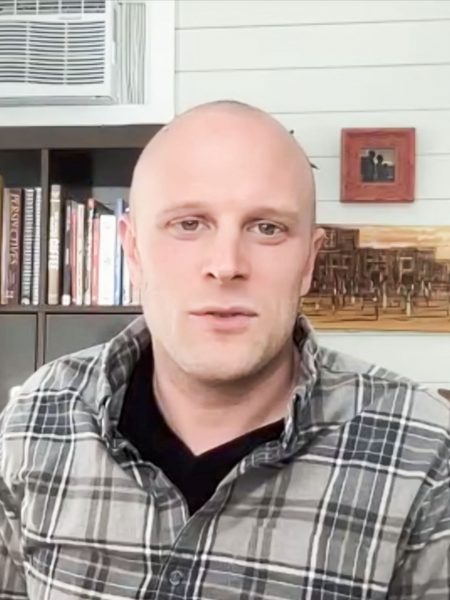 Dan Lewan provided an update on the Disaster Relief Fund. Over the past year, the Disaster Relief Committee opened & administered the Disaster Relief Fund which homed in on ways to engage with other nonprofits in the County where needs were acute in our own backyard. $61,792 was raised for this effort which included donations from Rotarians and funds provided from other Rotary sources. Grants were made to the Shelter Association of Washtenaw County for non-contact thermometers & to meet their funding gap; SafeHouse received funding pay increased staff costs related to the pandemic; Peace Neighborhood Center received funds to provide students additional training in literacy over the summer; Packard Health’s grant provided 105 patients with home blood pressure monitoring cuffs; Corner Health Center’s grant provided fresh fruits & vegetables to 50 participants in their summer nutrition program; Avalon Housing received grant funds for food, diapers, and baby formula; and we joined other funders to provide funds to Meals on Wheels, Food Gatherers, the Family Learning Institute which provided virtual tutoring for 30 students, and funds to the VA to work with homeless vets.
President Joanne provided additional announcements – the annual Rotary Fights Summer Hunger campaign is kicking off in March which raises funds for Food Gatherers. Contact Don Duquette to participate in the Rotaractor Mentor-Mentee program. Upcoming important dates to remember: Feb 27 is the District Grants Training Seminar (register online at rotary6380.org), April 17 is the District Assembly, May 5 is the RCAA PHF & Foundation Awards, Sept 13 is the Golf & Tennis Outing Fundraiser at Fox Hills, and the deadline to vote for Harpoon’s new name is March 10.
Dennis Powers introduced Luke Shaefer, Associate Dean for Research and Policy Engagement at the University of Michigan Gerald R. Ford School of Public Policy. Schaefer also serves as the Faculty Director of U-M’s Poverty Solutions – an initiative that aims to prevent and alleviate poverty through action-based research that informs policymakers, community organizations, government entities, and practitioners about what works in confronting poverty. He also co-authored with Kathryn Edin, “$2.00 a Day: Living on Almost Nothing in America,”
Schaefer’s talk was focused on how poverty has been impacted during the pandemic.
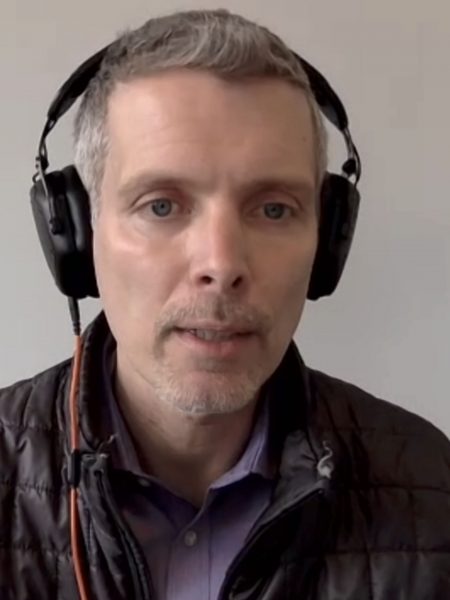 A year ago, the economic crisis was the major focus of the pandemic. The national response to the pandemic was the most effective economic response to a crisis in history. For the state of Michigan, pre-pandemic – 5,000 was the number of unemployment filings in a typical week. During the first week of the pandemic unemployment filings increased to 75,000, then 128,000, and by the third week it rose to 328,000. One of the major challenges was having this crisis come on all at once. The Federal bi-partisan effort to provide relief included a one-time stimulus payment. This had never been done in this manner before as the payments included upper, middle & lower classes. The package also expanded federal unemployment insurance to previously ineligible categories for those in non-traditional jobs (ex: gig workers, self-employed); The unemployment benefit was increased to $600/week. There has been a long running survey that includes the question: “Could you handle an unexpected $400 expense?” and the positive response to this question during this time showed improved dramatically especially among low-income populations. The short-term response was more effective than anyone thought in bringing many out of poverty. Families were stabilized temporarily due to the government approach. However, the further away we’ve gotten from the initial short-term response things have gotten worse.
In Michigan, a coalition formed some time ago to make the state system work better & more effectively and increase the state’s responsiveness to economic hardship. When food benefits were provided by the state during the pandemic, Michigan was able to deliver these benefits quickly. $750mm – $1B was provided to Michigan residents during the pandemic. One unique aspect of Michigan’s response was to be able to provide direct payment to utilities from funds received from the feds to pay past due utilities for low-income families facing shut off. 41,000 families were assisted with arrears payments. Michigan was able to leverage $50mm in federal funds to slow down the eviction process. There was a reduction of 50% of filing evictions and 80-90% reduction in people being evicted.
The current Biden proposal being debated includes a child tax credit which is a child allowance that recognizes that raising children is expensive. The US currently does not have this credit in place. The credit provides a small but stable source of income over the year and has been proven to cut child poverty in other countries that have this program. It is estimated this program would cut child poverty in the US by 45%. Romney’s competing plan is estimated to cut child poverty by 30%. One bright spot is that the pandemic has provided opportunities for lifting those out of poverty.
One local response to the pandemic provided by U-M’s Poverty Solutions was to increase participation in their summer youth jobs program with 30 placements county-wide, a three-fold increase. Schaefer was also excited to announce a partnership with recently appointed Washtenaw County Prosecutor Eli Savit to evaluate racial disparities in prosecutions and provide treatment and evidence-based solutions through every part of the process. Poverty Solutions has been working with the County on determining metrics to address the inequality which is one of the highest in the state.
A question was asked comparing the economic response now vs 2009 crisis. 2009 was very robust but didn’t expand unemployment insurance, didn’t increase food assistance and didn’t increase tax credits. The current response was fewer things for everyone & used cash more which showed that in the aggregate this response showed that people were paying rent and paying bills and was much larger financially.
Thoughts on $15 minimum wage? Schaefer doesn’t recommend increasing it now but graduating the increase over time. It will move some people out of poverty and could create job loss.
Universal basic income? Studies show that cash does improve outcomes in the aggregate because it does reduce negative behaviors (drinking/drugs) but studies show that it works but may not be worth the cost. Child allowance is the better program than universal basic income.
Child poverty in America is higher and American children are poorer than other western countries due to the values in the US. Compared to other countries, the US has no child allowance and has a stringent unemployment allowance, but more money is spent on healthcare than lifting child out of poverty. There could be a possible reduction in healthcare costs if child poverty is addressed.
President Joanne closed the meeting with this quote from Nelson Mandela: “As long as poverty, injustice, and gross inequity persist in our world, none us can truly rest.”
President Joanne adjourned the meeting at 1:29.
Respectfully submitted by,
Jennifer Fike

