


Our weekly meeting started with interesting conversations among members via Zoom. Members logging in just before the ringing of the bell missed those conversations between members that covered such interesting topics as Ken Fischer’s book sales and the successful Italian Festival Rotary fundraiser. Lori Walters welcomed guests and reminded members to mute themselves and use the Chat function to check in to the meeting.
President Joanne rang the bell to officially start the meeting at 12:30 pm. Tom Strode played a lovely rendition of “Star Spangled Banner”. Ken Fischer presented today’s inspiration which focused on the under-representation of blacks and minorities in orchestras and how Aaron Dworkin led the charge to change this outcome with the creation of the Sphinx Competition which is changing the face of classical music. More information can be found at www.aarondworkin.com. Aaron Dworkin’s work shows that one person can make a huge difference.
Our meeting song was a video of Marian Anderson singing at the Lincoln Memorial in 1939. She performed at this alternate venue because the Daughters of the American Revolution refused to allow her to perform at Constitution Hall because of her skin color. Click on the following link to hear and experience this presentation of the song: https://www.youtube.com/watch?v=XF9Quk0QhSE
Membership Engagement
Norma Sarkar introduced Aleia MacDonald, our new Membership Chair who presented the Membership Minute entitled “Sharing Rotary in the time of COVID-19”. 2 new members are joining for the Fall 2020 class – Laurie Atwood and Elaine Besh and one there will be one reinstatement – Dan Romanchik. Zoom has created new opportunities for our club as recently 7 people have expressed interest in our club. Please share your enthusiasm and excitement about Rotary with potential members. Aleia asked each Rotary member to share the Membership Brochure with at least one person you know who may be interested during the month of August.
Announcements
Joanne recognized all the worker bees who were buzzing around handling all the details that are necessary to pull off our virtual meetings.
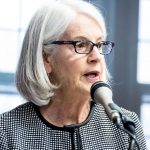 Joanne introduced Peg Talburtt who provided an update about the Italian Fundraiser dinner. Net as of today (Wednesday) amounted to $14,000. The food provided by Paesano’s was superb and as was the presentation led by Chaad Thomas & Mike Roddy and we thank them for their generous time and energy. Thanks also to Lauren Heinonen, Kathy Waugh, and Lori Walters for facilitating and managing the event along with the members of the Golf & Tennis Outing. Kudos to Steve Schramm for his fabulous emceeing skills. If you are interested in making additional purchases of wine contact Lori Walters.
Joanne also made these quick announcements:
The Board held a meeting this morning. Details of the meeting can be found here.
Jennifer Jones has been nominated as the President of Rotary International for 2022-23 and will be the first woman to hold this position in Rotary’s history.
There will be an MDOT – Adopt-a-highway clean up on Saturday, September 26 starting at 9:00 a.m. on the I-94 corridor between State & Platt. The rendezvous point is to be determined. Thanks to DOGS and the Public Image Committee for coordinating. Contact Tom Millard to sign up.
An in-person social distancing picnic at Karen Kerry’s house located at 3982 Barton Farm Court is scheduled for August 26 from 5-7 (rain date Sept 9) and limited to 25 people. RSVP is on a first come, first served basis, so the first 25 people to email executivedirector@a2rotary.org will be able to attend. The event is BYOE – bring your own everything (mask, food, drinks, everything).
Guest Speaker – Dr. Kenneth Resnicow, Irwin M. Rosenstock Collegiate Professor University of Michigan School of Public Health Behavior and Health Education and Associate Director Community Outreach and Health Disparities Research Rogel Cancer Center
Yolanda Whiten introduced today’s speaker and is proud of the work Dr. Resnicow has done in the Ann Arbor community. He has been working hard for many years with African Americans to improve health outcomes and quality of life.
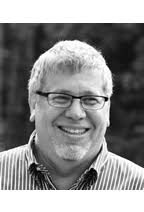 Dr. Resnicow’s presentation entitled “Health Consequences of Discrimination and Unfairness: A survey of Michigan Adults” conveyed the association between discrimination and health outcomes for 3 demographics groups – Blacks, whites, and MENA (persons of Middle Eastern and North African descent). A survey was conducted with included about 2/3 of Michigan and to determine the health consequences of discrimination and unfairness which showed that there were indeed negative health consequences. The result was not an anomaly just for Michigan as two other recent national studies also did similar studies and produced similar results. The first study, conducted by the Pew Center Research’s “Race in American 2019” showed that 56% of white respondents viewed race relations in the US as bad, compared to 76% of Black respondents. Another survey by Newsweek/Daily Beast Pool showed similar results to the Pew Center survey. One question which showed the differences in viewpoints was: “Do you think American society discriminates against certain people on the basis of race or ethnicity?” Responses were as follows: whites – 53%; Blacks – 88%. Other results in these surveys show that Blacks and whites view reality as very different.
A demographic map was shown which shows that geographic segregation is a big part of the problem but not the only problem. Income differences play a major part.
Are health disparities just a reflection of income differences and due to other differences. Dr. Resnicow said this was not the case as mortality data for the US shows that across all income strata Blacks live 3 years less which so shows that regardless of income, Blacks have lower life expectancy. Could discrimination, racism, and segregation contribute to these disparities? The 2019 U-M Rogel Cancer Center Health Survey (U-M/ACCESS survey) was conducted to answer this question for Michigan residents.
How do you measure discrimination? Discrimination is self-reported. The Williams Everyday Discrimination Scale which measures chronic and routine unfair treatment was used to determine discrimination on this survey.
When measuring unfairness, a main question is: how often do you feel you are being treated unfairly? The results of this question determine health outcomes.
Dr. Resnicow displayed the Discrimination Among Michigan Adults distribution graph which showed the following:
Blacks in Michigan – experience a much higher rate of discrimination and fairness and that these two variables connect to health outcomes. These health consequences include: 1) mental health symptoms: people who report high levels of discrimination have much higher mental health symptoms; and as unfairness goes up mental health symptoms increase drastically and this survey has shown these symptoms to impact Blacks more. Unfairness correlated to a higher history of depression. Cigarette use and discrimination showed that discrimination can lead to substance abuse to quell anger and cope with feelings; although cigarette use can itself cause discrimination; as unfairness increases so does usage.
A question on the survey related to deportation was only presented to the MENA community and showed that mental health symptoms scores are much higher as people are more worried about deportation.
Other health outcomes included an association between increased incidence of diabetes and a higher rate of unfairness and the same correlation was shown with high blood pressure and heart disease. There are also high levels of discriminated and unfairness related to body mass index (BMI); however, this could be causal.
Dr. Resnicow concluded by presenting 10 solutions to level the playing field and a call to action:
- Free universal high-quality healthcare
- Fully fund urban public schools
- Free/reduced college tuition
- Eliminate voter suppression
- National acknowledgement, tracking and reconciliation on racism
- Educate Americans about the extent of racism and the lingering effects of segregation and slavery
- Fair employment practices
- Fair lending practices
- Fair policing, bail and sentencing: restorative justice
- Adequate safety net (WIC, SNAP, Section 8, basic income)
Next Week’s Meeting
Next week’s speaker will be Valarie Wafer from the Rotary Club of Collingwood South Georgian Bay in Ontario and our zone’s representative to the RI Board of Directors. Her presentation will include a personal story of how “Rotary Opens Opportunities.”
President Joanne range the bell to adjourn at 1:30 pm, but many members stayed to have questions answered by Dr. Resnicow.
Notes respectfully submitted by Jennifer Fike

