


Until the latter 1950s, polio was one of the most feared diseases in the world, affecting over 35,000 persons per year in the U.S. alone. Families lived in fear while travel and commerce were sometimes affected.
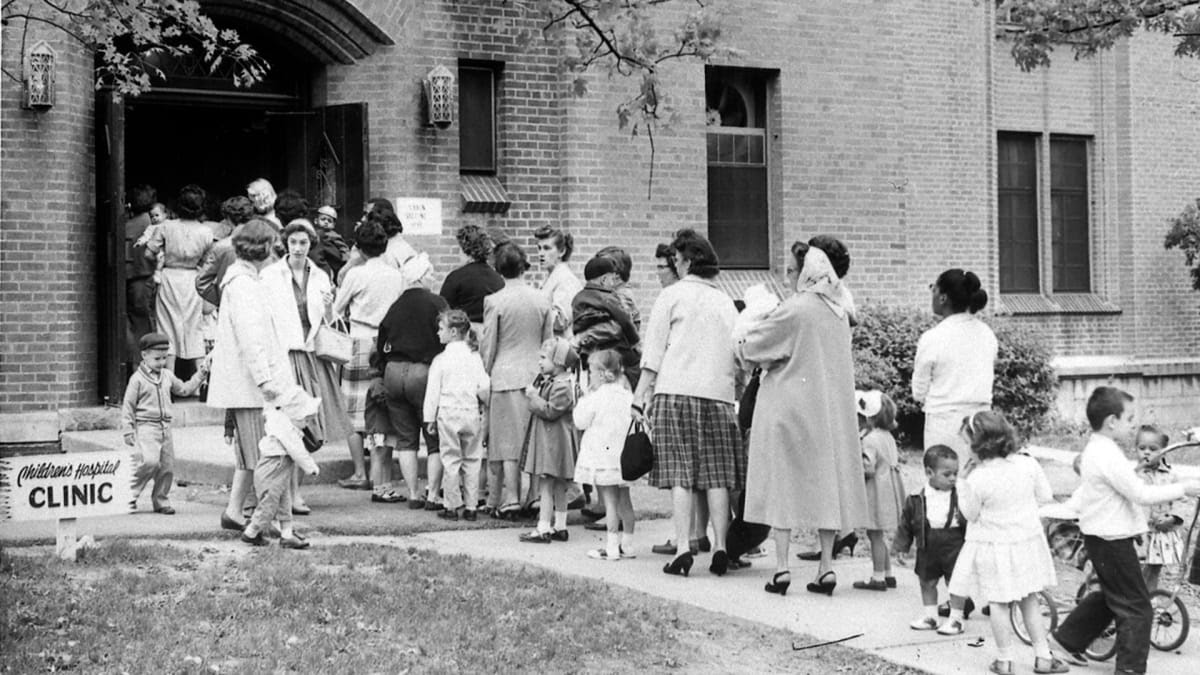
Field trials of the polio vaccine developed by Jonas Salk began on April 26, 1954, eventually involving 1.8 million children in the United States, Canada, and Finland. At the time, the trials were the largest in U.S. history. One year later, on April 12 in Ann Arbor, researchers announced the vaccine was safe and effective. It quickly became a standard part of childhood immunizations in the U.S. In the early 1960s, an oral vaccine created by Albert Sabin became available. It was easier to administer and cheaper to produce than Salk’s vaccine and eventually became the vaccine of choice in most countries.
Today, polio has been eliminated throughout much of the world due to the vaccines and the dedication of many organizations, notably Rotary since 1979 (which was also the last year for a case originating in the U.S). Nevertheless, there is no cure for polio and it is still present in small numbers in Afghanistan and Pakistan.
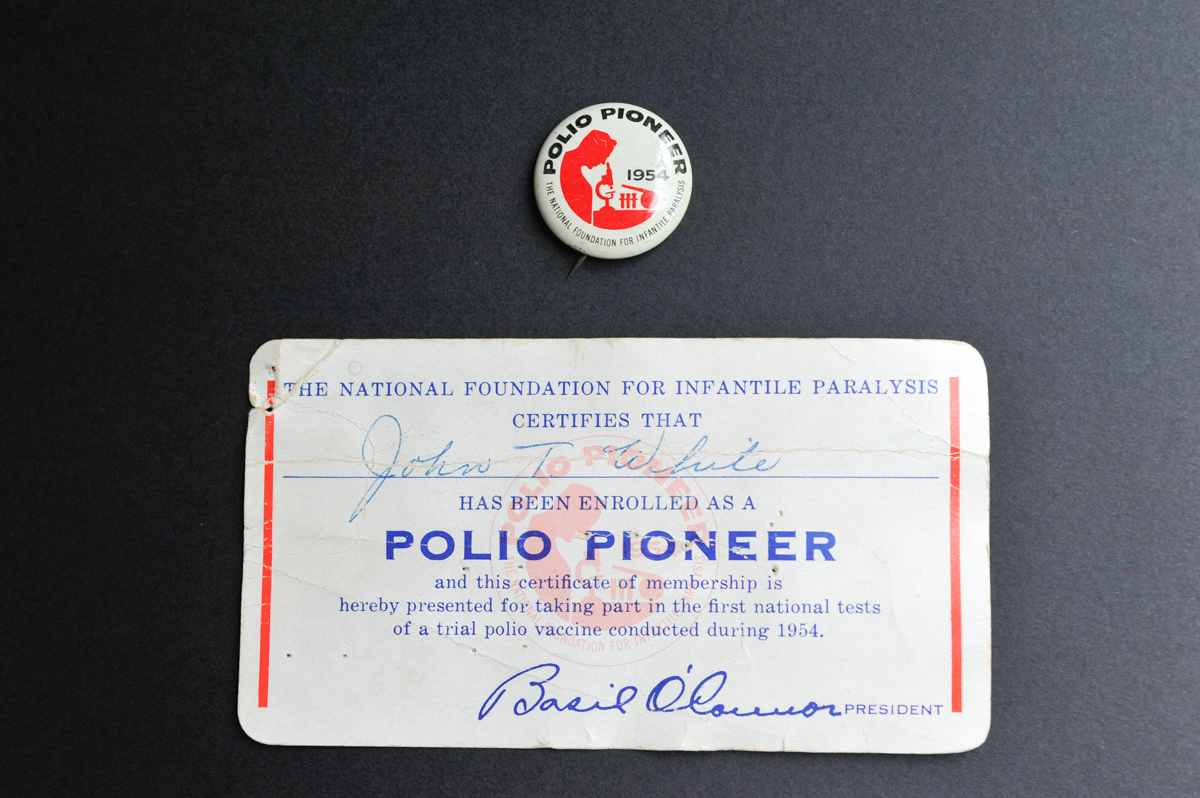
For those families who experienced first-hand the devastating effects of polio, the memories are surely clear. Most Americans nowadays have, at most, little experience of the days before the vaccines became widespread but John White of our club is one who does. He recalls mothers whispering among themselves about the disease and also has faint memories and actual documentation of his role as a “Polio Pioneer” in 1954 while in a Royal Oak elementary school. Thanks to his mom for saving his pin and wallet card. Perhaps it was those vague memories that drew him to Rotary.
For more information on polio eradication and what you can do help, go to www.endpolionow.org
By John White

