


The February 23, 2022 meeting opened on Zoom with social time. Dawn Johnson provided Zoom etiquette guidelines to the virtual attendees.
At 12:29, President Susan Froelich started the meeting by ringing the bell. Tom Strode led us in “America the Beautiful”. Inspiration was provided by Dawn Johnson who read “Eagle Poem” by Joy Harjo, current US Poet Laureate and the first Native American to serve in this position. https://www.poetryfoundation.org/poems/46545/eagle-poem . Harjo’s laureate project is “Living Nations, Living Words” which features a sampling of 47 Native Nations poets through an interactive story map. The selected poems are based on place and placement.
Rick Ingram shared the musical selection “Wayfaring Stranger” by Rhiannon Giddens. President Susan welcomed attendees. She announced that Joyce Hunter was recently featured on WEMU, discussing local Black history. https://www.wemu.org/wemu-news/2022-02-07/washtenaw-united-building-a-brighter-future-through-understanding-local-black-history. Birthdays were announced along with Rotary International’s 117th birthday.
Bob Mull shared a presentation about the Volunteer Income Tax Assistance (VITA) program and walked through an example of the significant positive financial impact this program had on one low-income family. Recent changes to the tax law such as expansion and changes to the child tax credit, child & dependent care credit, earned income tax credit, health insurance exchange premium tax credit have provided financial support for residents in the low-income tax bracket, and the VITA program ensures the participants take advantage of the credits available to them. Rotary Cub VITA volunteers include Eric Macke, Karen Gladney (now with Brighton Rotary), Bob Buchanan, Fred Beutler, and John Sepp.
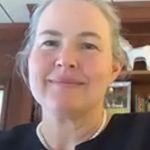
Joanne Pierson introduced one of AARC’s newest members, Sue Shink. Shink received a Master’s in Resource Policy from UM and graduated from U-M Law School in 1994. She worked as a lawyer in Port Huron, raised 3 daughters and is working on how to be a farmer. She owns 35 acres and raises horses, goats, chickens, & ducks along with fruit. She is the current Chair of the Washtenaw County Commission (elected in 2019, chair since 2021) and has served as a trustee Northfield Township, served on their land preservation committee, along with Washtenaw County’s Agricultural Land Preservation Advisory Committee (ALPAC). In her spare time, she enjoys her horses, jewelry making, hiking, spending time with family, and cow herding. Every time she hears the 4-way test, it really speaks to her and through her service works on improving the quality of life for others.
Dennis Powers introduced speaker Professor Derek Peterson with the U-M Dept. of History who discussed “Repatriation of Historical/Cultural Objects; A Study in Restorative Justice”. He explained that there are many antiquities held in museums around the world that were acquired in questionable circumstances. For example, there are over 120,000 objects held in the Royal Museum of Central Africa that were obtained by looting. African museums in contemporary Africa have little resources and few antiquities and very limited budgets. These financial and infrastructure difficulties leave a legacy of dispossession and violence. African objects are classified and represented as a collective genus but very rarely shown with artist representation. Museum collections built by unjust means are hard to see. African museums have found it hard to engage to confronting colonialism.
There have been efforts in recent years to repatriate African antiquities. In 2017, French President Macron
vowed to oversee the repatriation of artifacts that were obtained in dubious circumstances and return 28 bronzes held by French museums to Nigeria. Other governments have taken steps to repatriate objects, but it has been difficult for the west to do this. Lack of provenance is one obstacle. In most cases, museum collections were obtained by people who weren’t interested in the identities of the artists and provenance of these objects. There have been issues with determining how to display the objects in Africa when received. Artifacts are displayed but cultural and political history is missing. Many collections in African museums were established in the 1950’s and 60’s and reflected how museum pieces were displayed during that time which doesn’t address past conflicts. This is true in Uganda where is has been in the self-interest of the Ugandan government to deflect these issues. Professor Peterson has worked with museum curators and university colleagues in 2019 on a special exhibition in Kampala, Uganda entitled “The Unseen Archive of Idi Amin: Photographs from the Uganda Broadcasting Corporation”. Over 8000 people viewed exhibition. The exhibition also traveled to Amin’s hometown. Building on this success, the museum is building a gallery focused on the country’s history but there is no funding for collection development.
In 2021, funding was received for years-long effort to repatriate and display items taken from Uganda under questionable circumstances. Professor Peterson is working with a team of colleagues will select a set of artifacts from the Cambridge museum, repatriate them to Uganda, conduct research on their history and provenance, and exhibit them in the Uganda Museum in Kampala. Professor Peterson discussed the history of these items. During the late 1800’s & early 1900’s Rev. John Roscoe built the collection during a time religious upheaval and political and cultural tumult in Uganda. There was much interest in these collections from the west as new museums were being built. In 1908 Roscoe began collecting for the Cambridge museum. The new Christian aristocracy brought campaigns against religious solidarity which allowed Roscoe to collect these treasures cheaply. He collected these objects from fearful, terrified Ugandans who felt the need to rid themselves of the past. These antiquities were viewed as of tools of “old religion” which was then discredited and discarded as the remnants of the past and devalued due to colonialism in this part of Africa. In 1961, during Ugandan independence, the Ugandan government requested return of Kibuuka relics. Cambridge directors agreed and the relics were returned to Kampala in 1962 which was unprecedented during that time.
The current project’s efforts will seek to locate relatives & descendants from where objects were taken with the goal of reuniting families, clans, and professionals with these items that were taken from them during the late 1800’s/early 1900’s. The goal is reconstructing the biographies of these objects in absentia and provides an opportunity to see how people made meaningful things and how social order was reformed. Another goal is to display these items in Kampala and to empower the objects to speak about politics and history of these antiquities to show the whole logic as an entire story. This effort can spur efforts in other governments & museums and furnish curators in Uganda and other African countries an example of how this repatriation can occur.
President Susan concluded the presentation announcing that the Club was making a gift to eradicate polio in honor of Professor Peterson. Matthew Altruda is next week’s speaker who will talk about cryptocurrency.
Meeting with be hybrid – mix of Zoom and in person
Quote of the Day was from Eeyore “A little Consideration, a little Thought for Others, makes all the difference.” President Susan adjourned the meeting at 1:30.
Respectfully submitted by,
Jennifer Fike

