


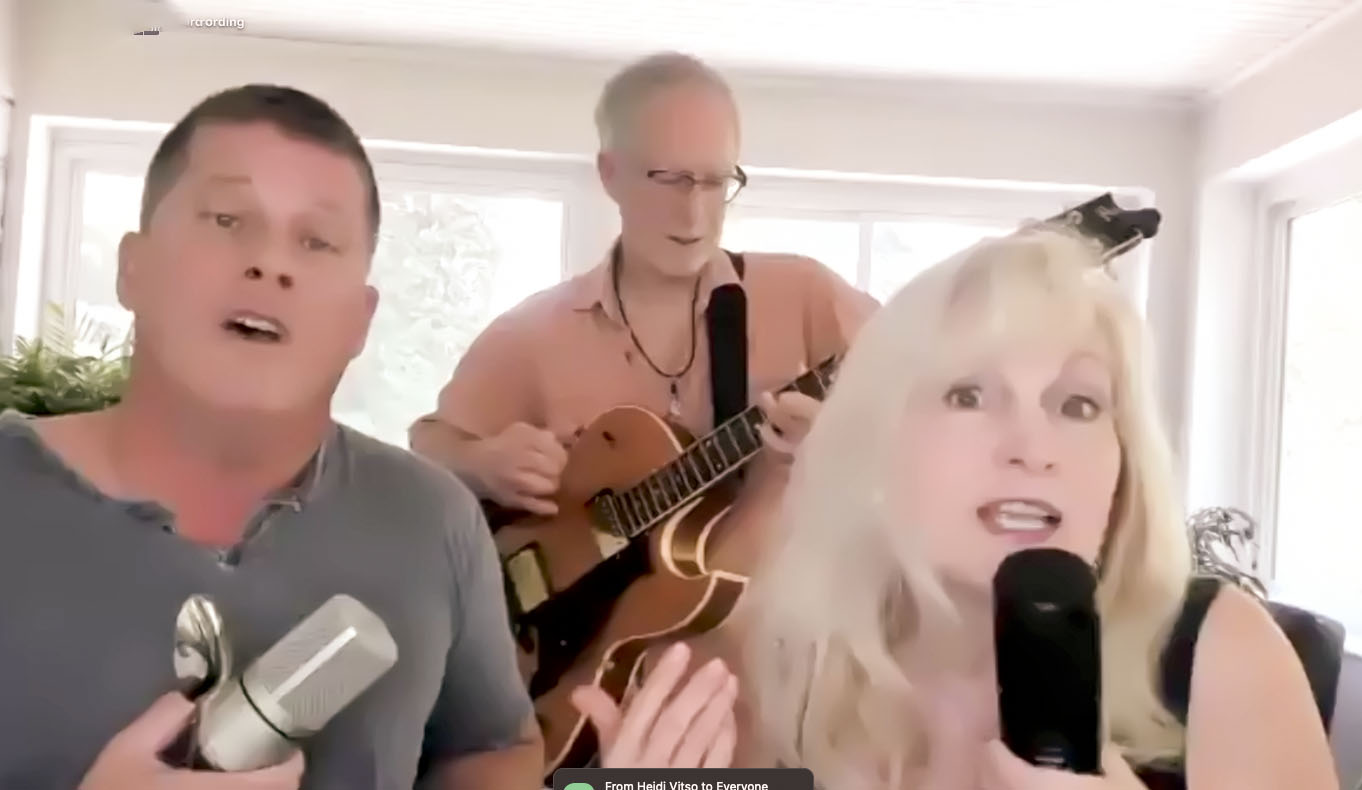
A song especially written by Marlena Studer and Steve Pierce to the tune of “I Got Rhythm” (“who could ask for anything more”) was celebration of our speaker and Boston. What talent we have in our club!
President Joanne’s Report—full of news, as usual.
As Joanne said, dear Al Storey levitated us all with his presence and conversation. As part of talking with Al on screen, we all sang a rousing Happy Birthday, not all together and not all in tune but sincerely meant!
Thanks to meeting coordinators and Lori and with an announcement of birthdays that includes Al Storey.

New Members: We welcome Eli Savit, Washtenaw County Prosecutor. Eli is a graduate of UM, clerked for Justice Ginsberg and from 2016-21 worked for Mayor Duggan in Detroit.
VITA: staff manager of program Emma Roeder presented important information. The group that Bob Mull has committed 11 years to had a very difficult but successful year. All work was online which was hard for some folks to access. But there was great success–49 volunteers with 535 returns completed, $1,310,505 refund, 149 in avoided tax preparation. In addition, there were new means to connect at several locations throughout the county. After work began, there were many tax changes to give more money to clients but the changes means refiling will have to be done for huge percentage of clients.
Dawn Johnson is asking for a new attendance taker to take the place of Karen Gladney as she moves to a new role.
Announcements:
Dues are past due. If not paid by the end of June, you will be dropped from the club.
Peace Poll dedication will be June 30 at Gallup Park, 4PM. Look for more details as the day approaches.
Incoming District Governor is hosting a picnic in Howell, July 22
Golf & Tennis Outing (GTO) is September 13 and volunteers are still needed. There are many positions that need filling and you are encourage to sign up!
Speaker: Mark Volpe, the President and CEO of the Boston Symphony Orchestra.
The Boston Symphony Orchestra, founded in 1881 by Henry Lee Higginson, is the second oldest orchestra in the United States. It plays ten months of concerts each year: the subscription season at Symphony Hall in Boston from October through April, the Boston Pops concerts (made famous by Arthur Fiedler) at Symphony Hall in May, and a summer season at Tanglewood in western Massachusetts in July and August. Alone among the major orchestras in the United States, it owns all the venues in which it plays.
Pre-pandemic, the finances of the Boston Symphony were on the soundest footing of any orchestra in the United States. It’s endowment stood at $435 million at the end of 2018. The major line item for any performing arts organization is Human Resources. Of the 94 chairs in the Orchestra, 62 are endowed, 51 of those being fully endowed in perpetuity; the music directorship and most of the artistic and administration positions likewise are fully endowed. Having such sizable expenses removed from the operating budget frees up resources for enhanced community outreach and engagement, as well as for enriching the pre-professional training afforded the fellows at The Tanglewood Music Center each summer.
All this changed with the outbreak of the coronavirus pandemic in March of 2019.
The Boston Symphony cancelled the remaining two months of its subscription season. All performances at Tanglewood that summer were cancelled in May for the first time since World War II. The resulting loss in earned revenue approached $35 million in September. This led to the lay off of 50 of the 180 members of the Orchestra’s administrative staff. In addition, salary reductions averaging 37% were negotiated with its musicians. The net result has been to reduce the Orchestra’s operating budget from a pre-pandemic $103 million to $57.7 million today. The total loss of earned revenue as of this May exceeds $51.5 million.
Necessity is the mother of invention.
The absence of a “live” Tanglewood season in 2019 accelerated plans for the introduction of a streaming platform — BSO Now — to connect the Boston Symphony with its audiences. A “virtual” season emerged. Every Friday, a taped chamber music recital by members of the Orchestra aired. Saturdays and some Sundays saw recitals by guest artists who had been scheduled to appear as soloists with the Orchestra; these were taped by the artists at his or her home venue and then aired. Additional Sundays featured rebroadcast of televised concerts from past summers.
The streaming platform proved so successful that it was continued during what would have been the 2020-2021 subscription season. The stage in Symphony Hall was extended over the first twelve rows of seats so that the full complement of musicians could be seated in socially distanced fashion. Hour long concerts were videotaped and then streamed about every three weeks. Each program included a piece of chamber music by a black or woman composer in addition to works from the standard repertoire. It is anticipated, going forward, that similar live-streamed concerts will become a regular aspect of the Boston Symphony Orchestra’s subscription season.
The fall and winter of 2020-2021 saw planning begin to explore how and when to resume live performances as Massachusetts began to relax the restrictions on large gatherings. Epidemiologists from the T.H. Chan School of Public Health at Harvard were consulted. State and local officials were brought into the conversation.
On April 8, the Boston Symphony announced that there would be a scaled back Tanglewood season this year. Concerts would take place each weekend between July 9 and August 16, limited for the most part to Saturday evenings and Sunday afternoons, half the number usually staged. Each concert would have no intermission and would not exceed 70 minutes in length; no program would include vocal music. Audience capacity in the Shed and on the lawn at Tanglewood would be limited to 12% of capacity. Seating would be socially distanced, with masks required. All indoor facilities on the Tanglewood grounds would be closed to the public.
Tanglewood’s grounds are two adjoining estates in Lenox, Massachusetts. The principal concert venue is the Koussevitsky Music Shed, a covered open-air pavilion designed in 1938 by Eliel Saarinen with a seating capacity of 5700. Every other row of seats will be closed off for this summer. Within rows, groups of patrons will be separated by 6 feet of empty seats. The surrounding lawn, which can hold as many as 2500 more people admitted on a general admission basis, will be capacity-limited as well. The Boston Symphony has invested more than $1.1 million in COVID-related measures to make its 2021 season at Tanglewood happen, including expanded crowd management staffing and logistics, and other elements.
Despite the uncertainty attending this planning process, the Orchestra has maintained the caliber of guest soloists engaged to perform. The cellist Yo-Yo Ma and the violinist Joshua Bell are returning as they have almost every summer. Up and coming stars such as the pianist Daniel Trifinov, the violinists Leonids Kavakis and Barbara Kride, to say nothing of the piano duo Lucas & Arthur Jussen, will make appearances. All were eager to appear and in some cases greatly reduced their performance fees.
The prognosis for Tanglewood therefore is trending up. Music-making of the caliber that Boston Symphony Orchestra audiences are accustomed to will fill the Berkshires again this summer.
Notes by Marsha Chamberlin and Dennis Powers
Photography by Fred Beutler

