


Watch the full meeting recording here
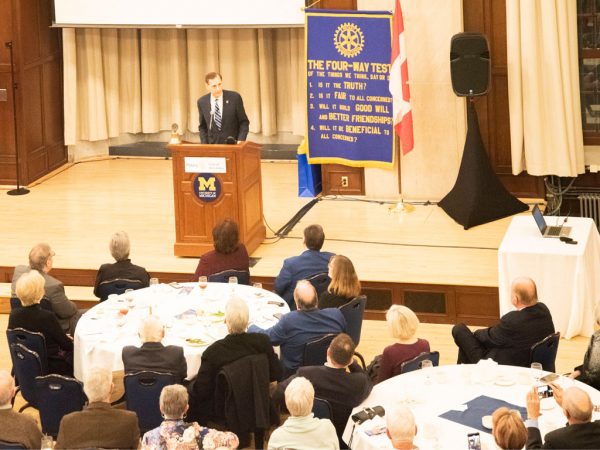
Beautiful bright hallways greeted Rotarians as our Club returned to its traditional home in the Michigan Union. Many of us visited the newly renovated spaces and found them full of students making good use of the new meeting spaces for group study or camaraderie. Music by the Paul Keller Jazz Trio lured us into the ballroom where a buffet dinner was served. More than 260 Rotarians and guests attended.
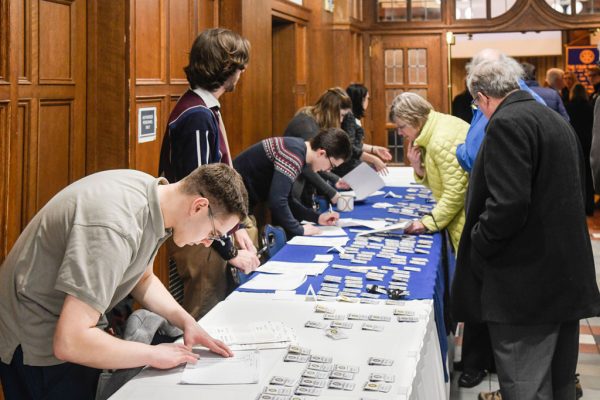
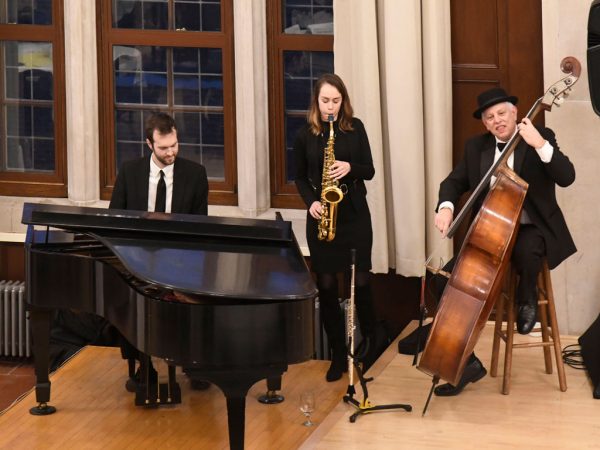
The entire program was recorded by a professional videographer and will be posted on our website as soon as it is ready. Keep an eye on the website!
The day had started with an interview with Lucy Ann Lance, 1290WLBY’s popular local hostess. You can listen to the interview here.
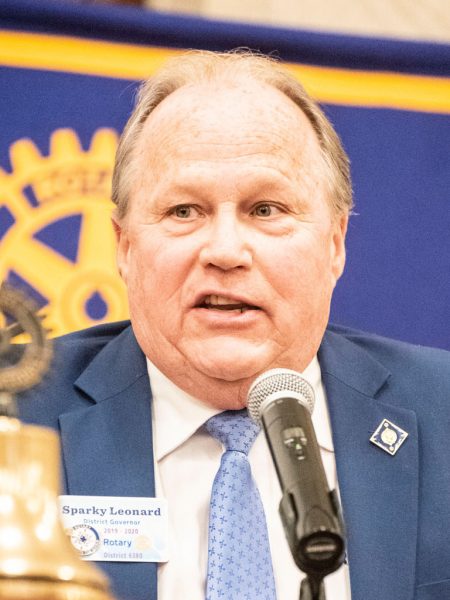
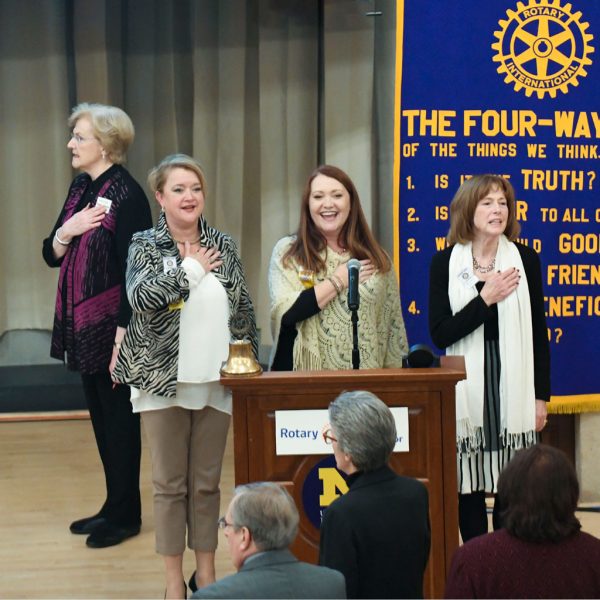 President Rosemarie rang the opening bell and we rose to sing The National Anthem and Oh Canada, accompanied by Joanne Knoertzer. President Rosemarie greeted the assembled company and turned the introductions over to Sparky Leonard. He first introduced our speaker, Rotary International’s Secretary General John Hewko’s family, beginning with his father, who is a Rotarian at Glacier Hills. Many of the Rotary ‘glitterati’ came to celebrate with us including many past and upcoming District Governors. There were many guests from other clubs in the area, including Detroit and Auburn Hills.
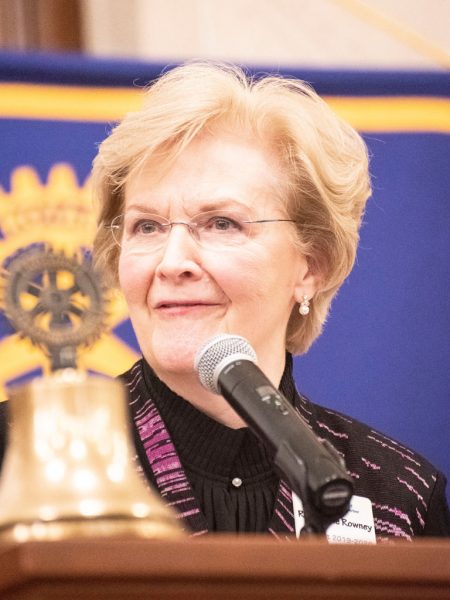
President Rosemarie returned to the podium to reflect on the long history of our Club in the Union. She said we had come to our senses: sense of place, sense of purpose, and sense of what’s possible. Our sense of place began with our meeting here in 1916. We had to move when WWI soldiers were billeted in the Union. We returned in 1919, and had to move again when WWII soldiers were billeted here. Our sense of purpose is in our theme: Helping Kids Succeed, both locally and internationally. And our sense of what’s possible is exemplified by the determination and success in the polio eradication campaign.
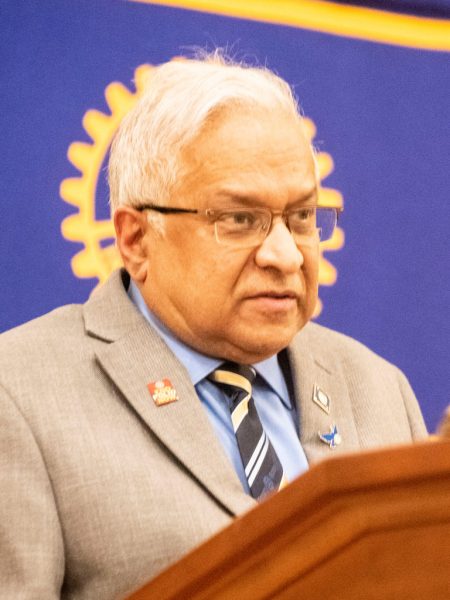
Past President Ashish introduced our Speaker, John Hewko, Secretary General of Rotary International. John is a Michigan native. He has an impressive academic background that has been strengthened and applied in public service. He served in the Bush Administration and from 2004 to 2009 was vice president for operations and comtact development for the Millennium Challenge Corporation (MCC), a U.S. government agency established in 2004 to deliver foreign assistance to the world’s poorest countries. He came to Rotary International in 2011. He oversees a staff of 800 who administer both Rotary International and the Rotary Foundation.
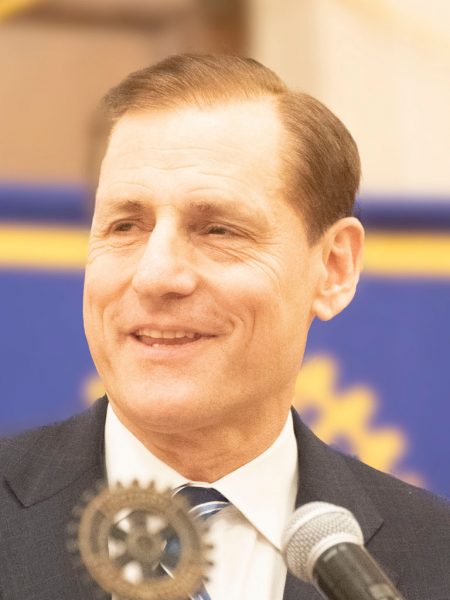
Secretary General Hewko began his remarks with telling us the importance of reading The Rotarian and listening to fathers – his father sent him the page from The Rotarian that described the position he now holds. He went on to praise our Club for its hard work and dedication, and the many contributions it has made to the local and international communities, as well as to the Rotary International causes. When thinking of how Rotary matters, he listed the 36,000 clubs of 1.2 million members, the $400,000 raised for the Rotary Foundation, the $850,000 value of volunteer hours spend on local and international projects, and the power of the the $1.3 billion Foundation, and the $1.15 billion clubs have raised from their local communities that is then reinvested locally and internationally. These contributions are made annually, making Rotary International one of the top NGOs in the world.
Rotary also matters because of its work in building peace and good will. Forty-five Rotarians were among the drafters of the UN Charter, so we have been associated with the UN for all of its 75 years. A 1943 Rotary Conference led to the creation of UNESCO. Our fellowships and programs bring Rotarians, Rotaractors and Interactors, into target communities promote understanding and good will.
Rotary is unique because it represents the intersection of commerce and cause. It is also unique because it is local and international at the same time.
There are six big challenges for Rotary. Membership is falling, especially in North America. The strategic plan will focus on engaging people who don’t join clubs, which will require us to rebrand Rotary and diversify the club experience by responding to the demands of the younger generations for looser, more flexible experiences. We have to rethink how to remain relevant and redouble our efforts to remain so. We have to become more nimble to respond to changing technology environment. While making these radical changes we have to figure out how to maintain continuity when we have club offices changing every year and RI leadership rotating through short leadership assignments. And as the polio eradication campaign nears success we need to settle on the next global project. It must be meaningful to Rotarians, have measurable results, and inspire participation of Rotarians beyond writing checks. And finally, the organization finds itself drifting into a confederation of regional entities rather than staying in one cohesive unit. We have to capitalize on Rotary’s structure and values, because this is The Glue that holds Rotary International and its clubs and Rotarians together.
Watch the full meeting recording here
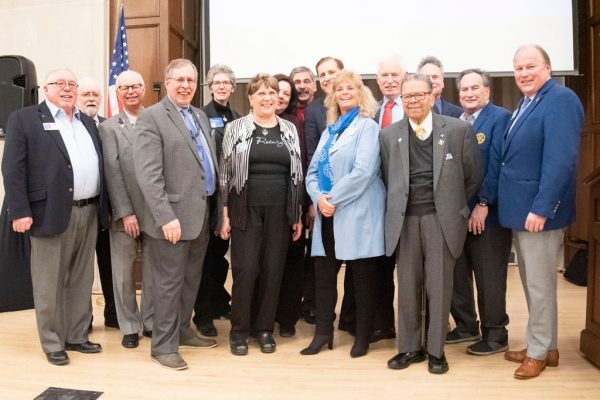
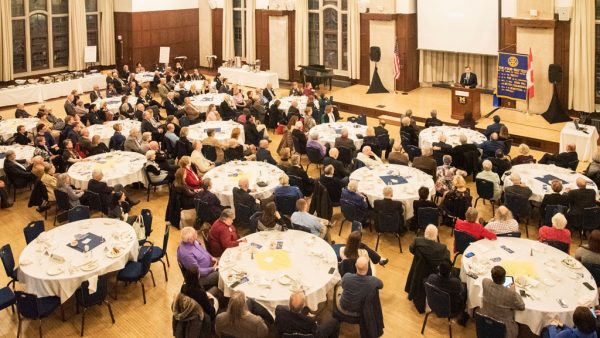
See additional photos from the event below:
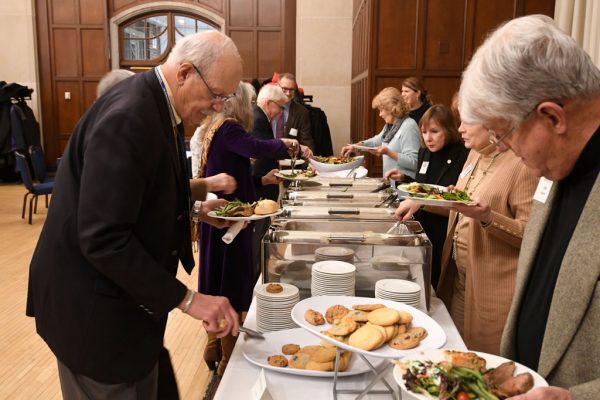
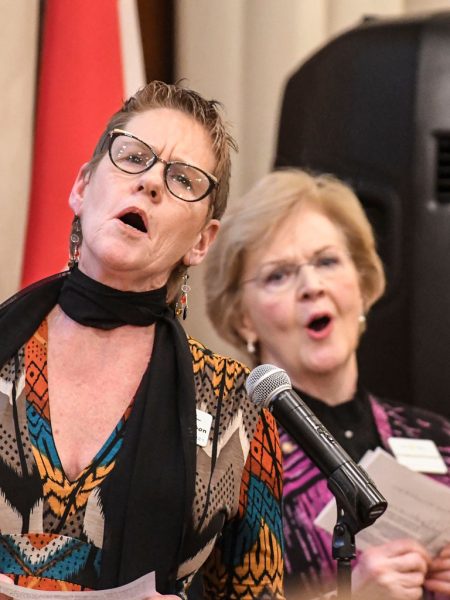
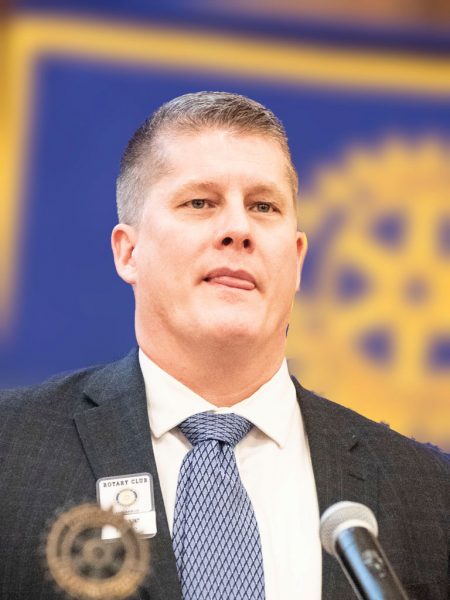
Reporting by Agnes Reading. Photography by Fred Beutler and John White.

